Packaging
The pack itself: form exploration, paper mock-ups and prototypes, the dieline and the choice of materials.
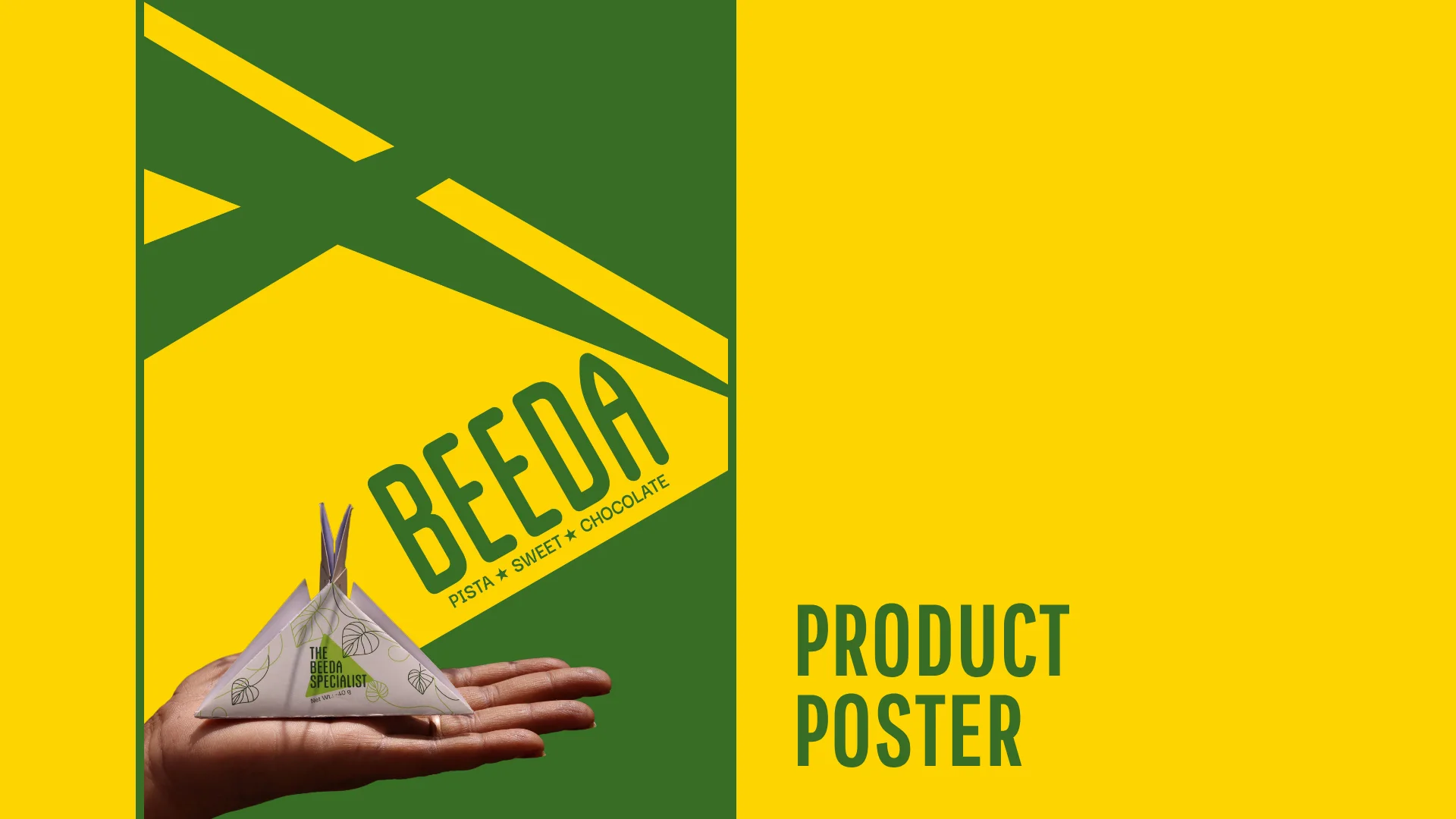
Takeaway packaging for a sweet beeda shop: a folded pyramid that keeps the syrup in and the leaf whole.
Beeda is a traditional Indian mouth freshener: a betel leaf filled with sweet, aromatic ingredients and folded into a triangle or cone.
It is eaten after meals and holds cultural and social value across generations. The sweet variant is especially popular, because it suits adults and children alike. It is also a difficult thing to package.
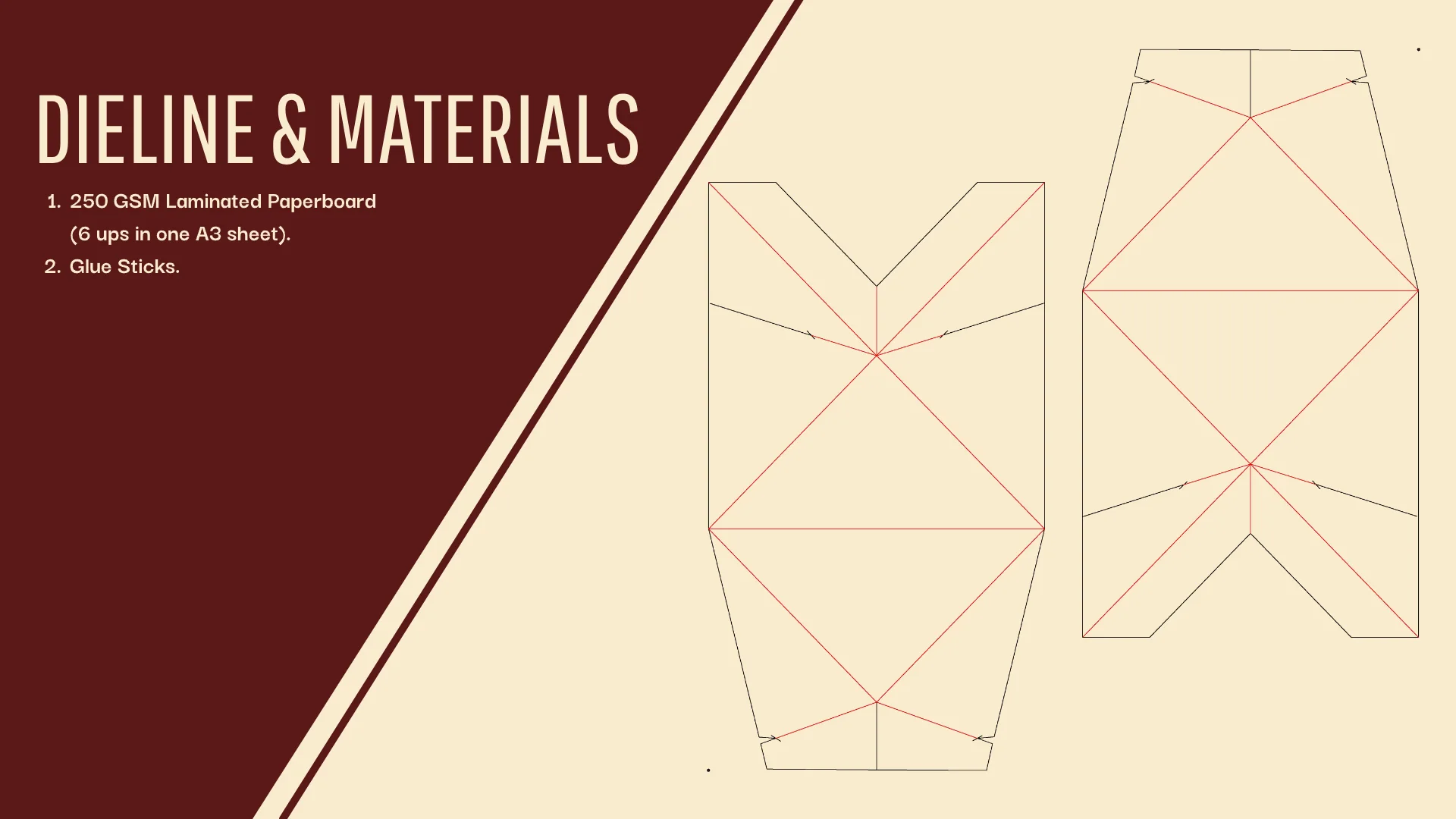
My dieline, folding around a beeda: the sides and logo face rise first, then both sides come together and lock. Switch between the three flavours, open it to lay the sheet flat, close it to fold it back up, and drag to turn it.
The pack itself: form exploration, paper mock-ups and prototypes, the dieline and the choice of materials.
The brand identity: logo, colour palette, typography, illustrations and the artwork printed on each pack.
Visiting the shop, the research and task analysis, and turning them into the brief and design parameters.
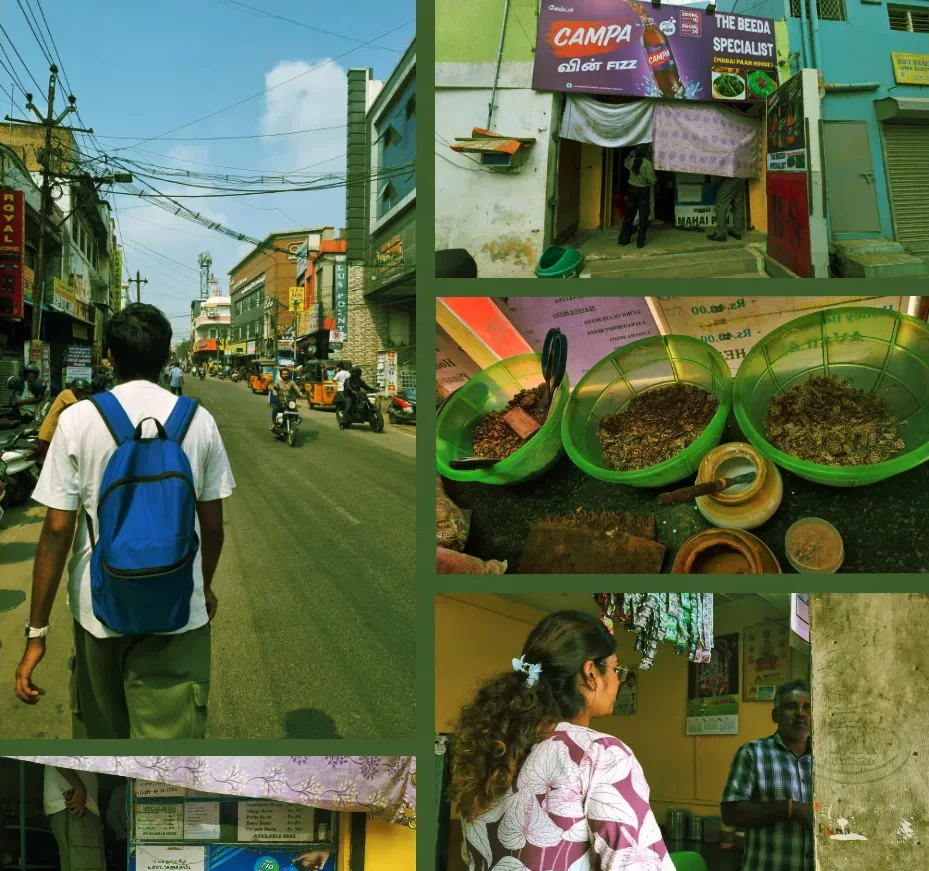
Every beeda is made ahead and stored in the fridge to stop moisture spoiling it, and the day's stock usually sells out. Secondary research confirmed it: beeda is a moisture-sensitive product, heat and humidity make it spoil and leak, traditional wrapping protects it poorly, and hygiene worries leave room for better packaging.
Careful handling and grip adjustment to avoid syrup leaking; the toothpick is removed.
Usually eaten in one bite. Syrup drips, because there is no grip or drip control.
Supari pieces, toothpicks and wrappers are thrown away, and there is often no dustbin.
Key issues: spillage, sticky hands, torn leaves, a poor grip and unclear disposal.
Keep the syrup in, the leaf whole.
Hygienic, eco-friendly takeaway packaging that stops syrup spilling, keeps the beeda fresh and protects its delicate structure.
It had to let vendors pack quickly, carry cleanly and stay stable in transport, while keeping dust out and being easy to throw away.
The shop has been making sweet beeda for 13 years, known locally for consistency and freshness.
It prepares beedas in small batches and keeps them refrigerated. A strong base of regular customers and hotel orders built its name, and the recipe has changed over the years with what customers like.
The brand takes the Everyman archetype: beeda is a daily, familiar ritual, so the brand should feel reliable, honest and relatable rather than flashy. The tone of voice is simple and clear, about freshness and consistency, without exaggeration.
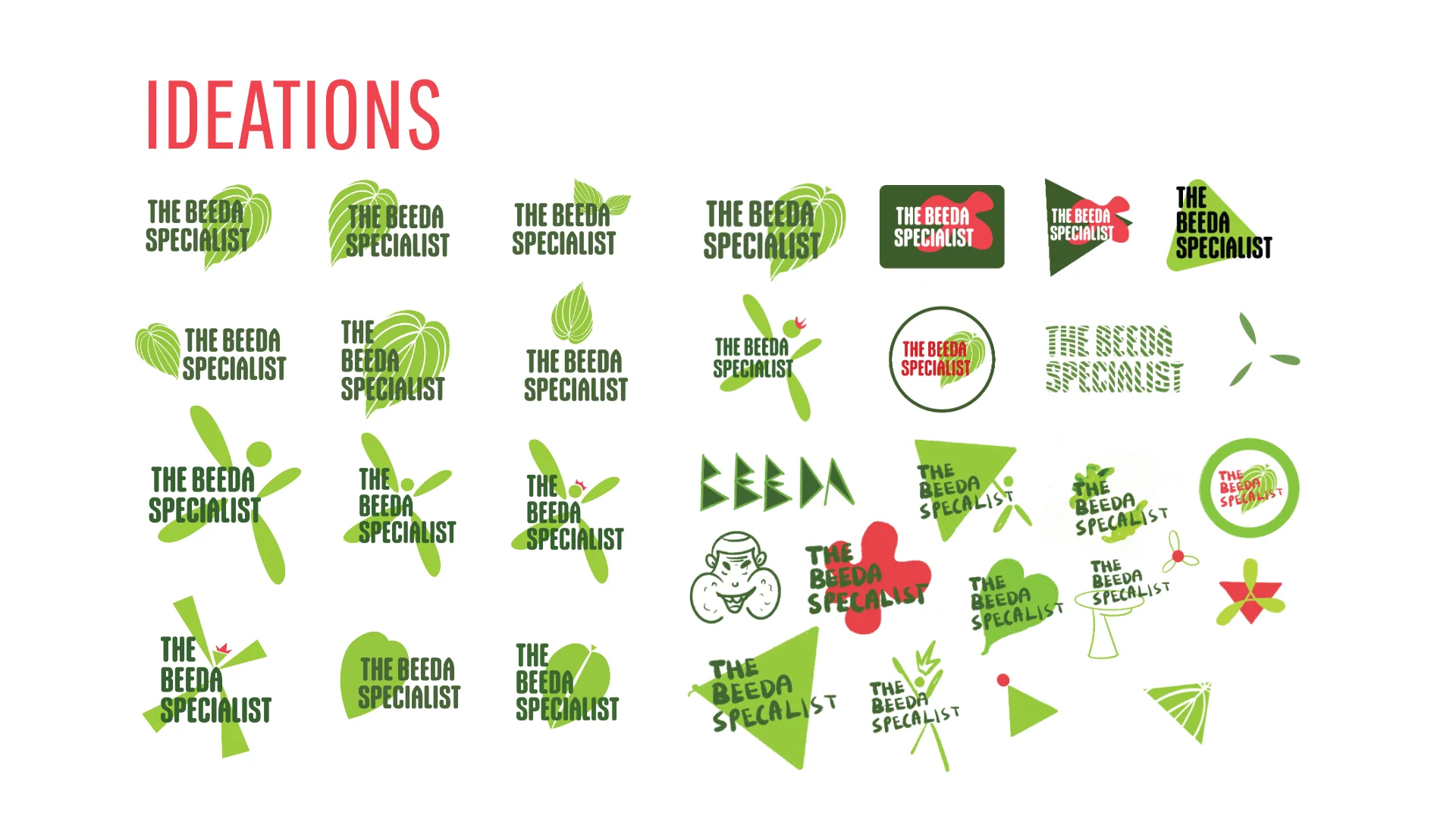
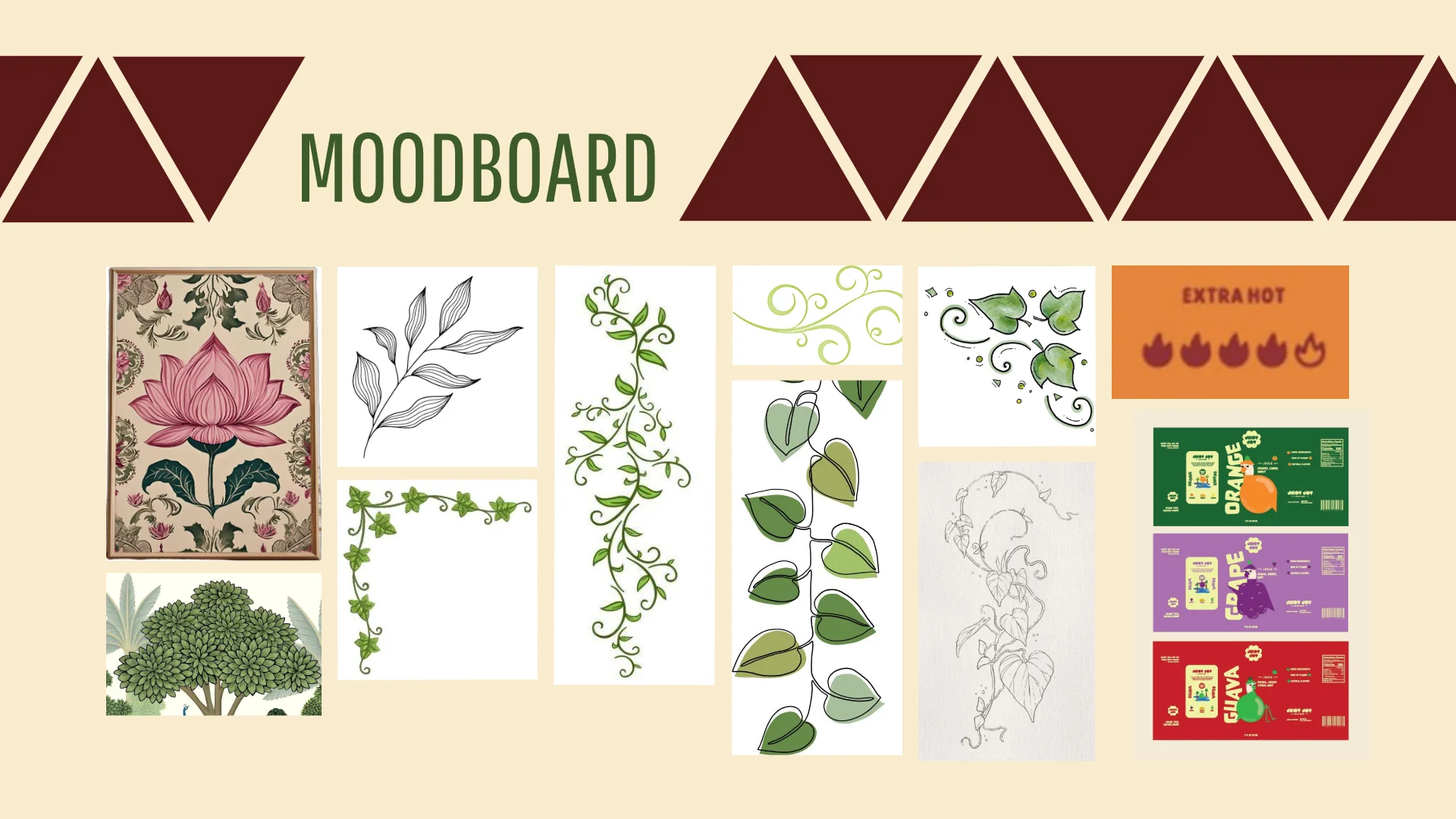
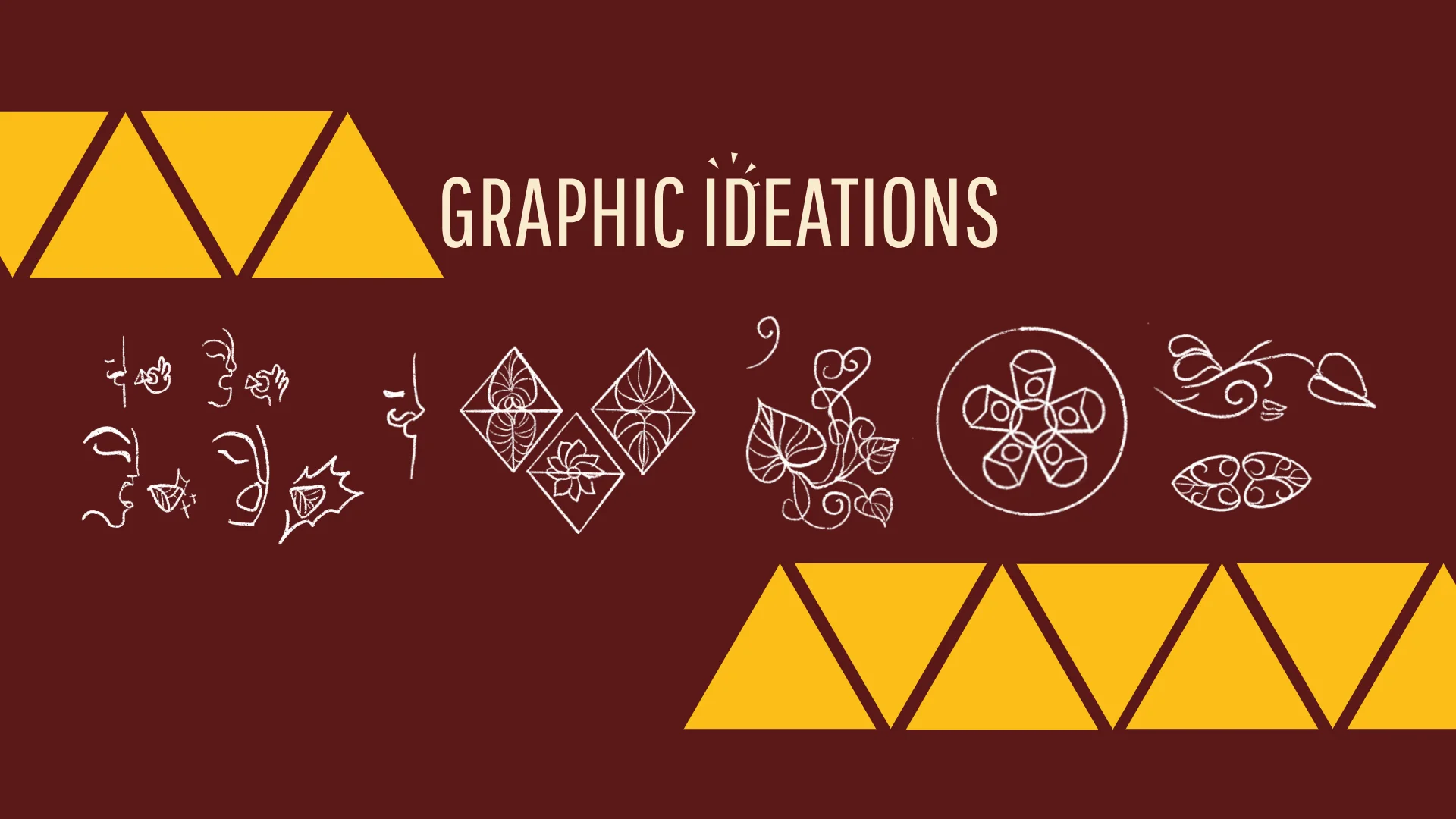
Betel vines, leaves and folk-art patterns fed the moodboard. The graphics became a gold and green line-art vine that wraps around each pack.
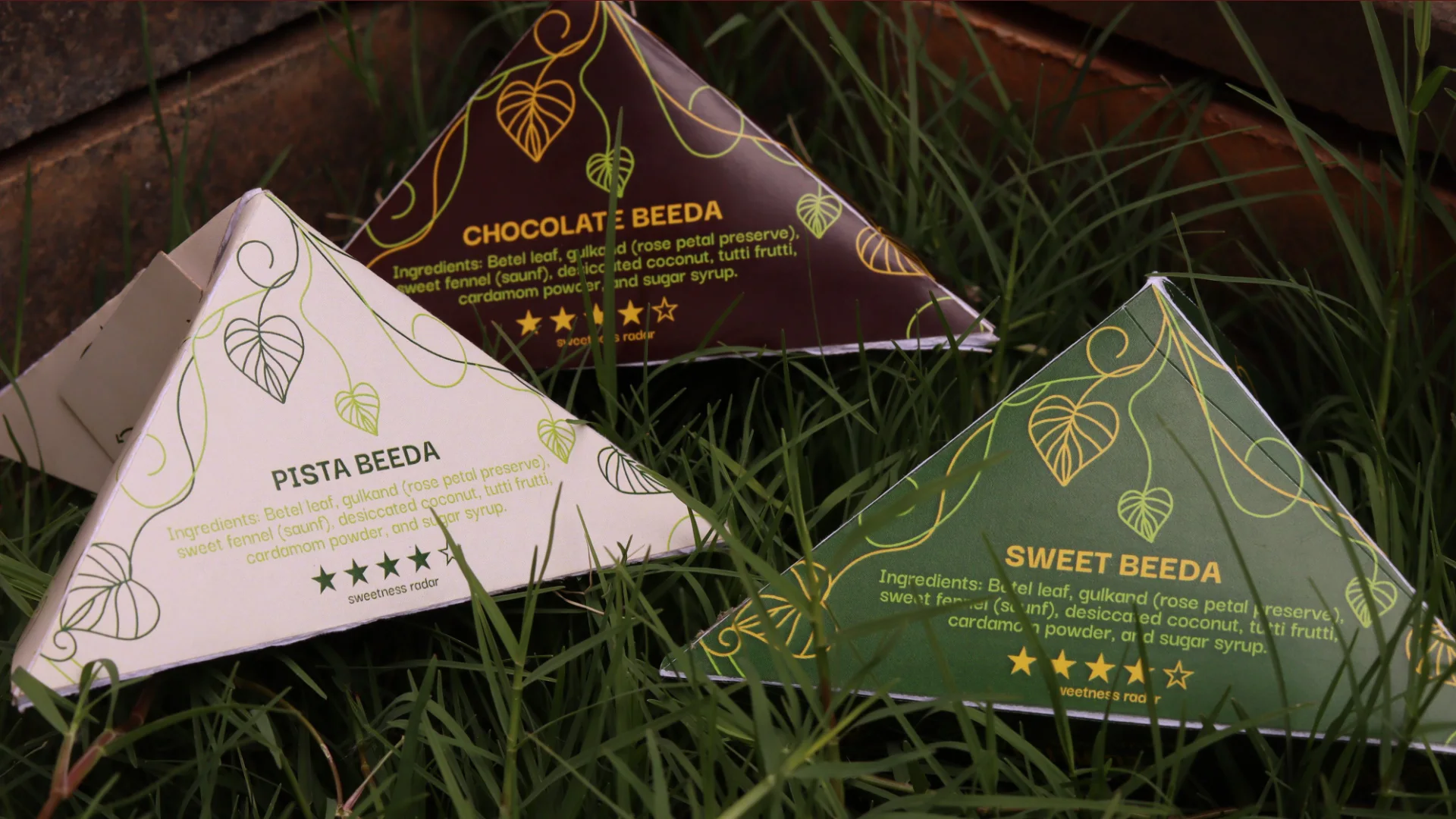
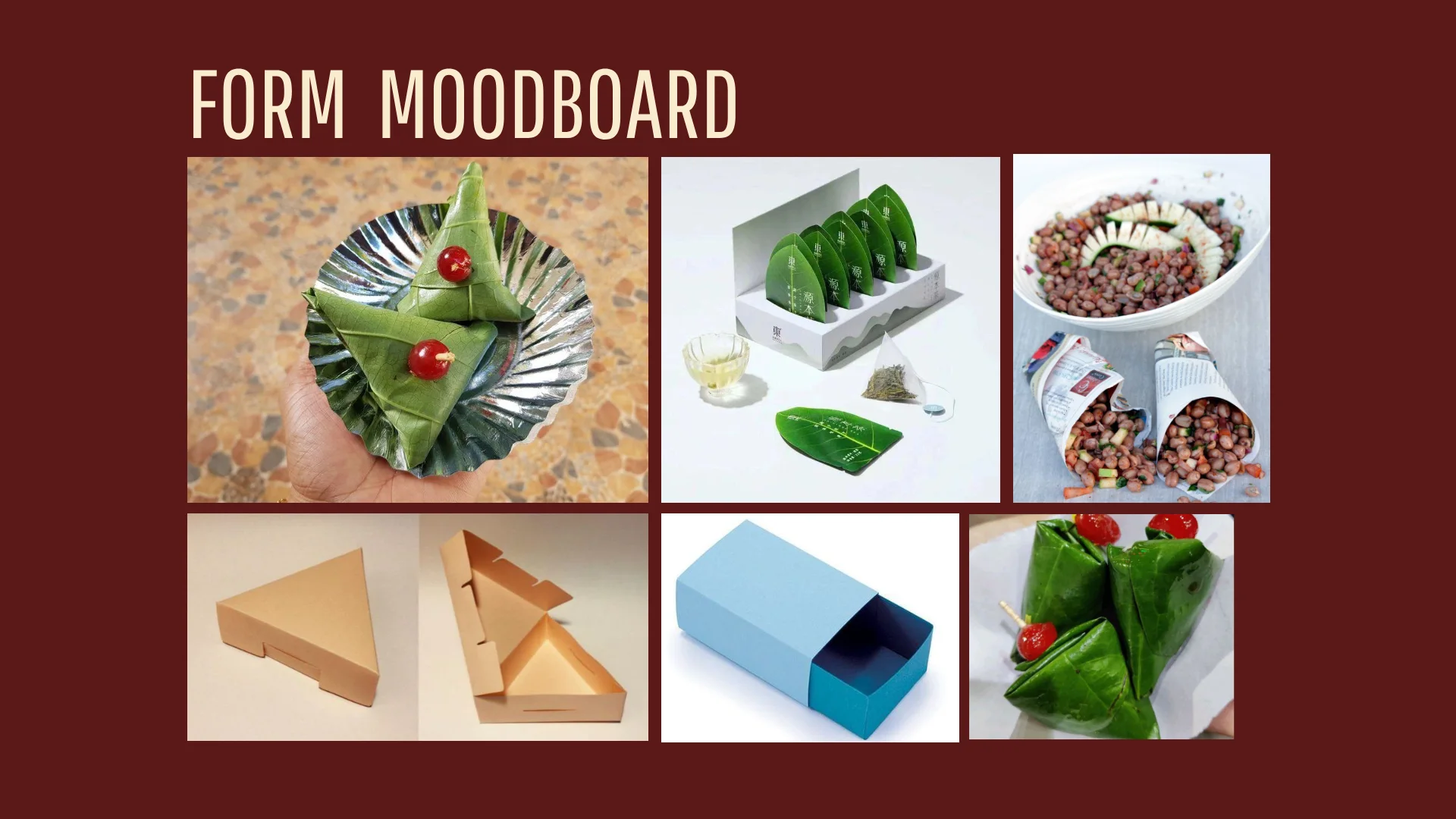
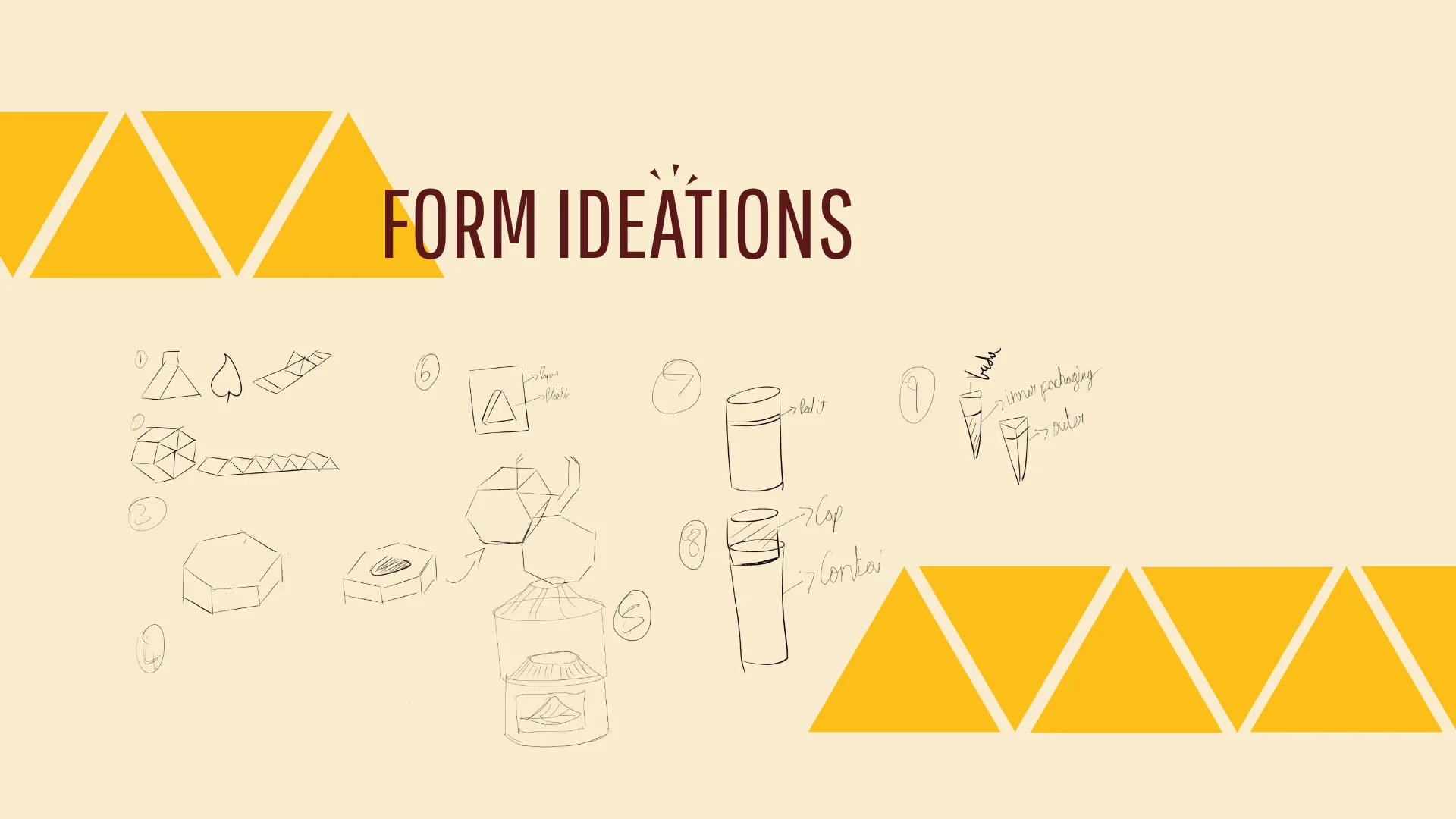
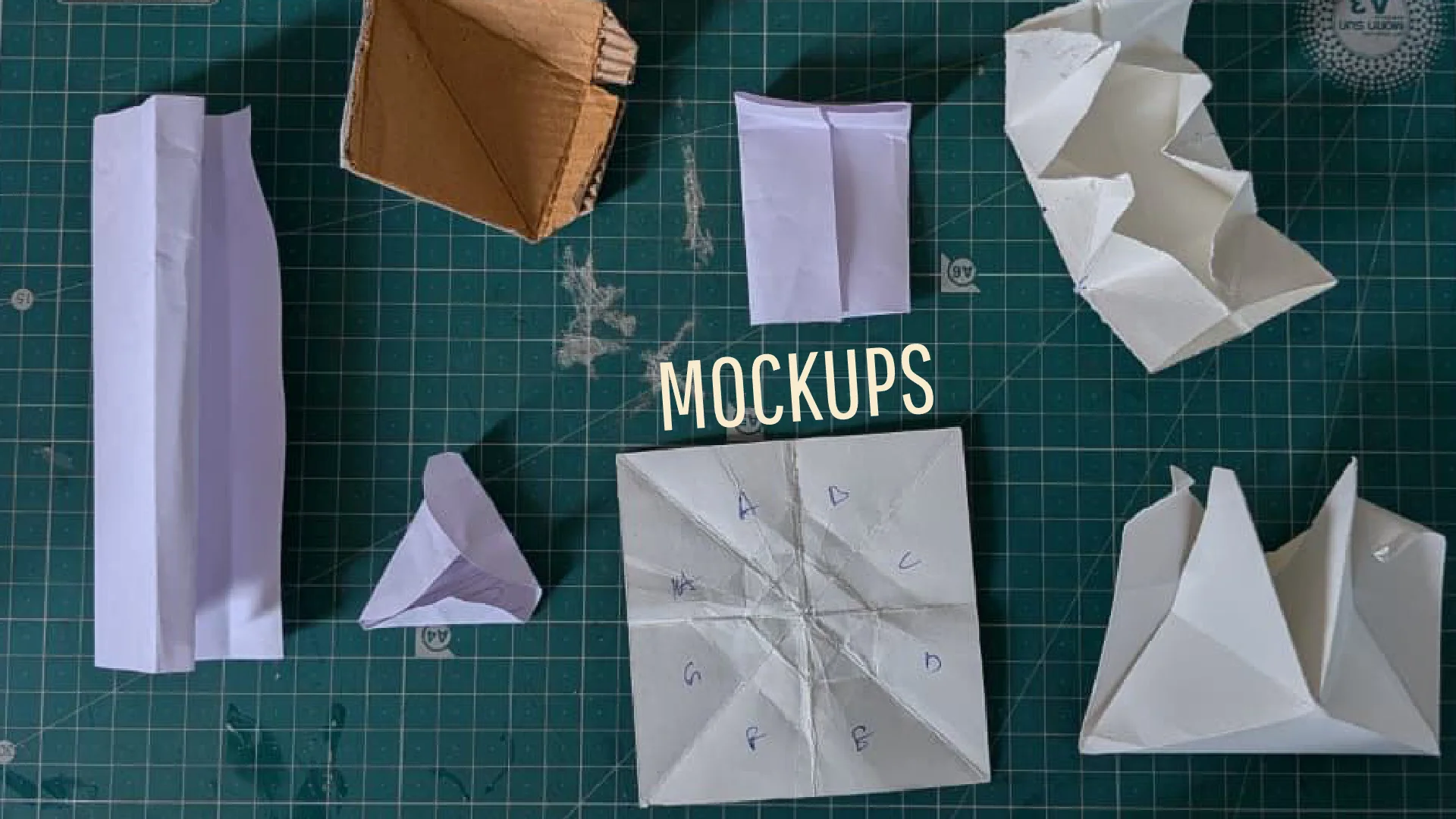
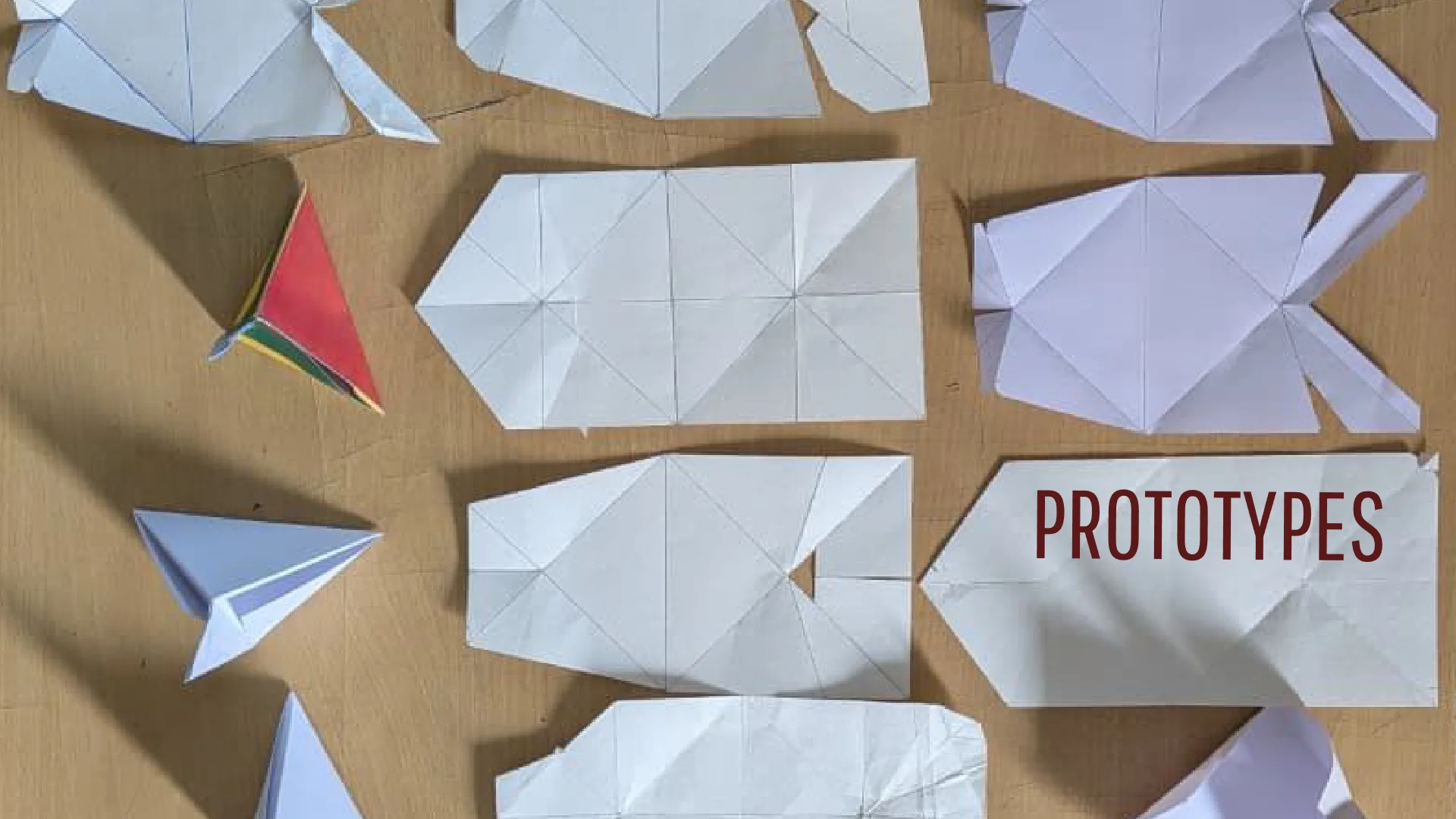
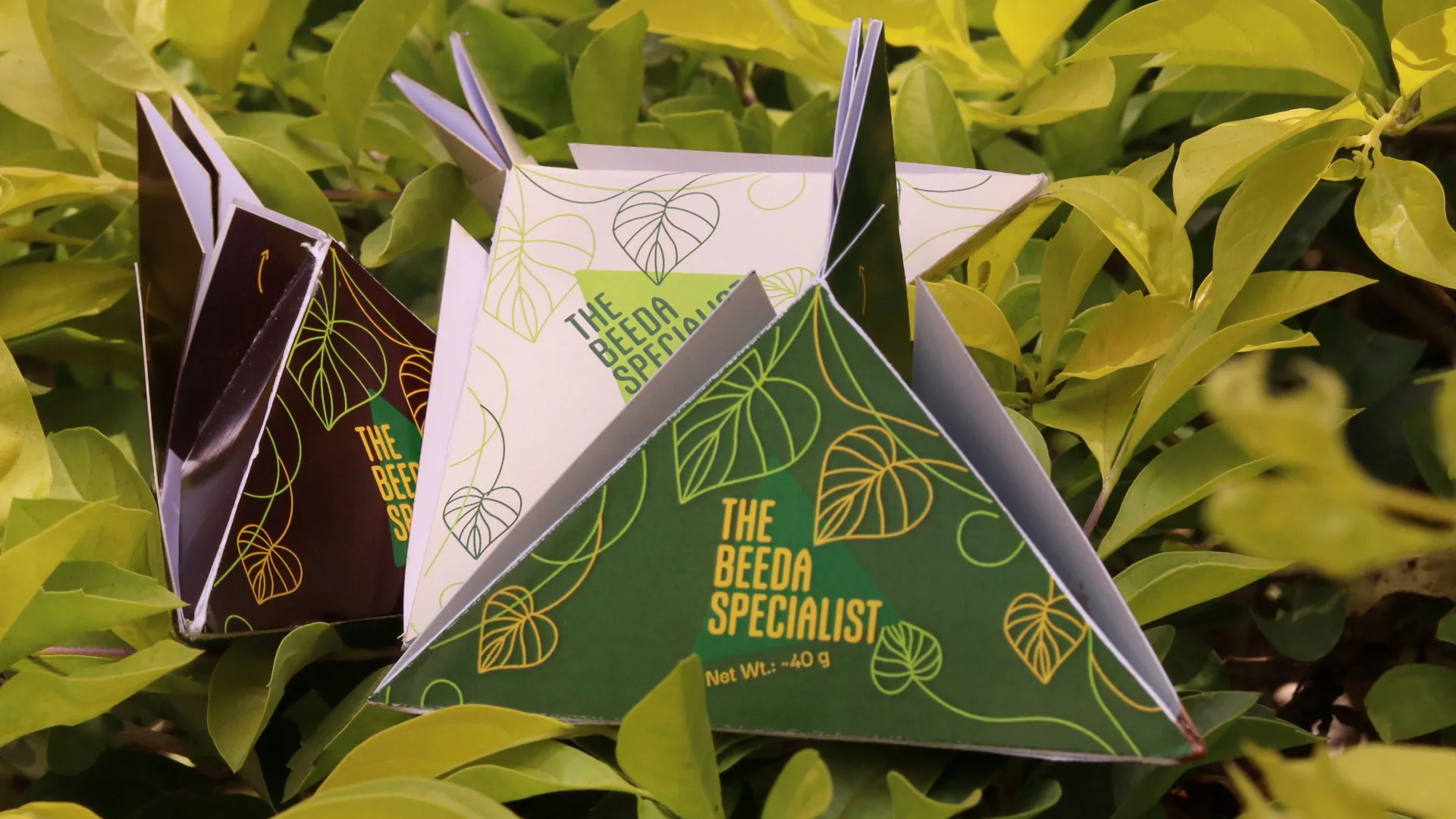
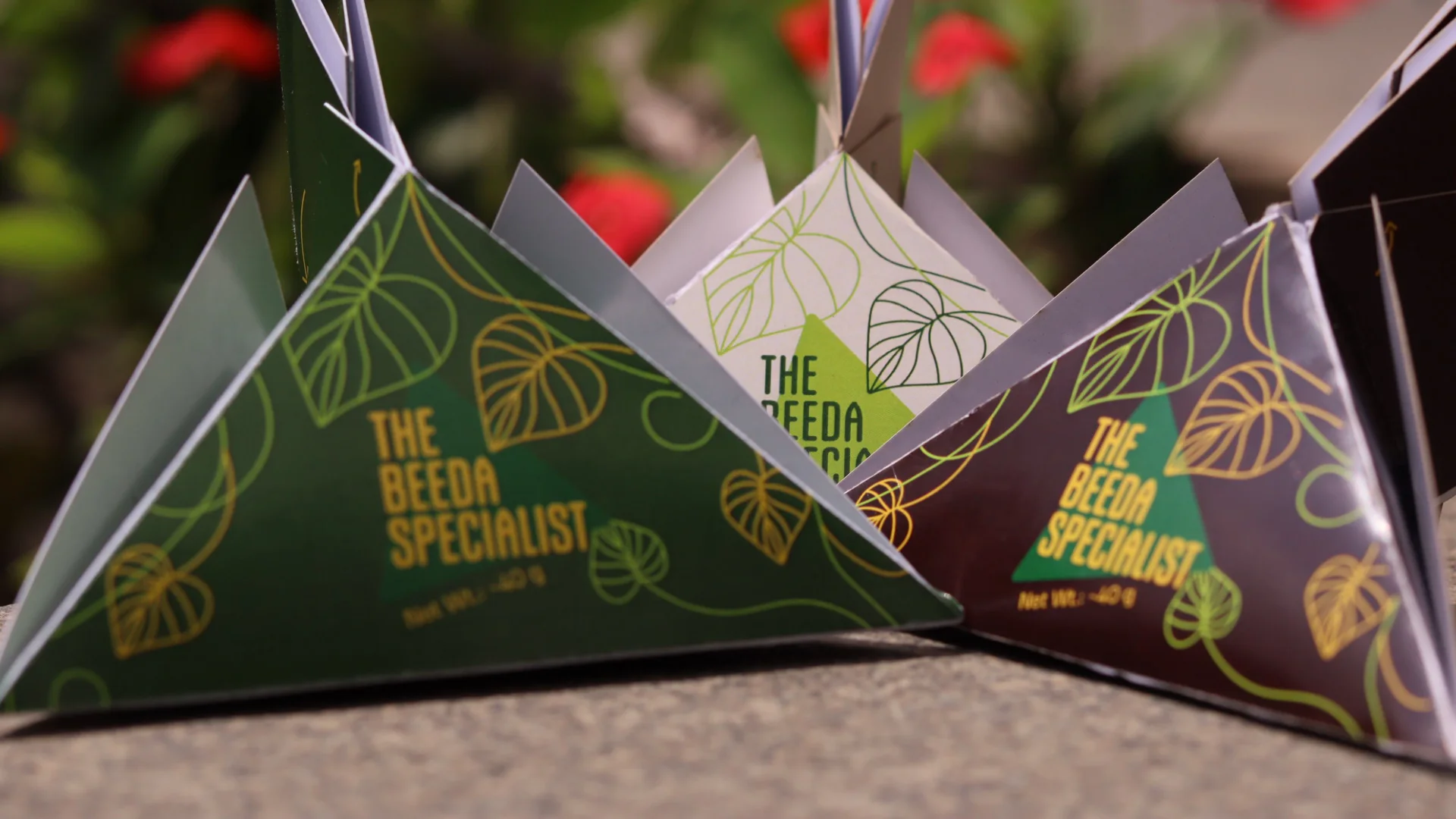
I tried cones, pouches, boxes and pyramids in paper first. The final form is a folded pyramid, the same triangle a beeda is folded into.
One fold, three flavours.
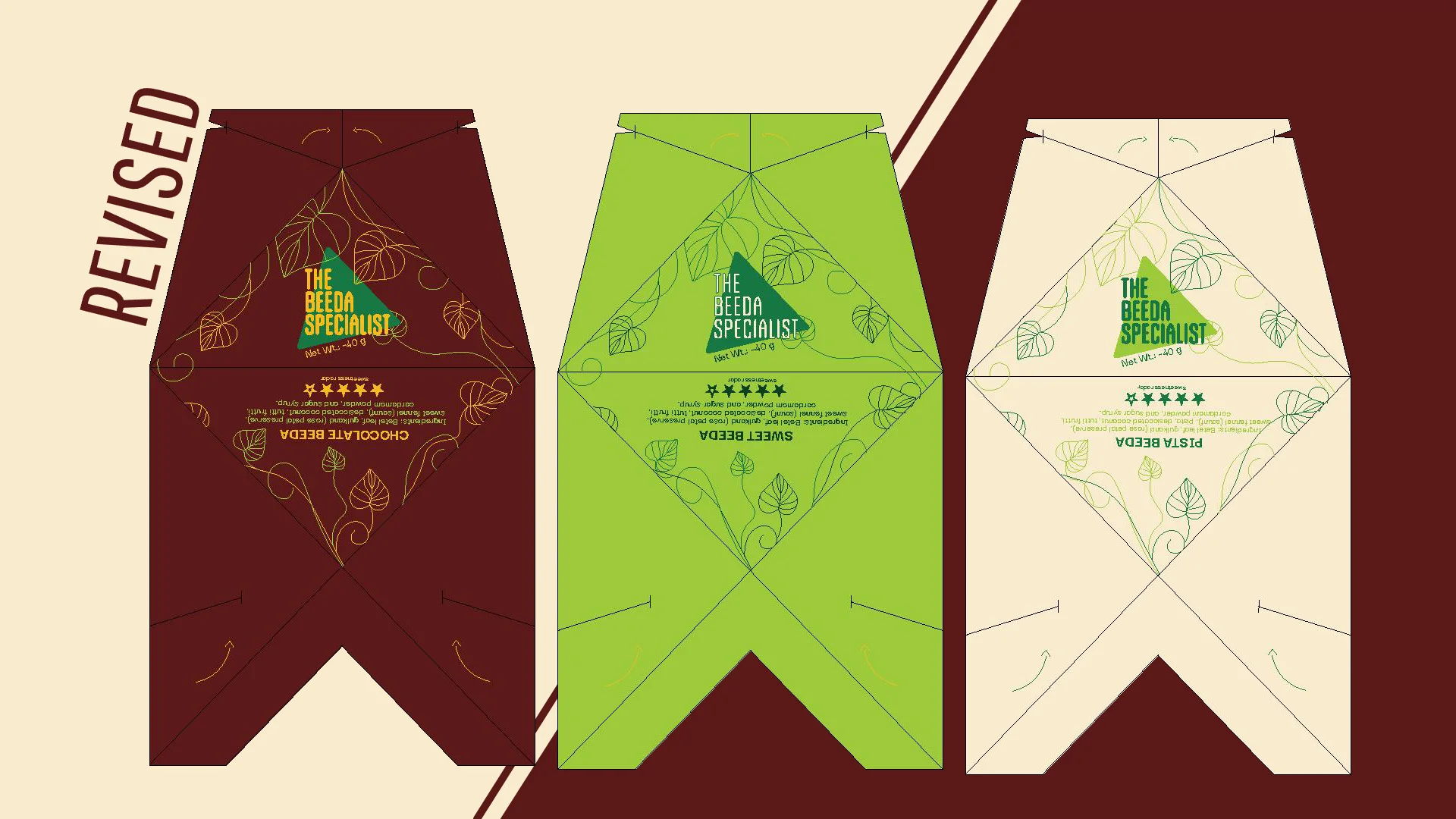
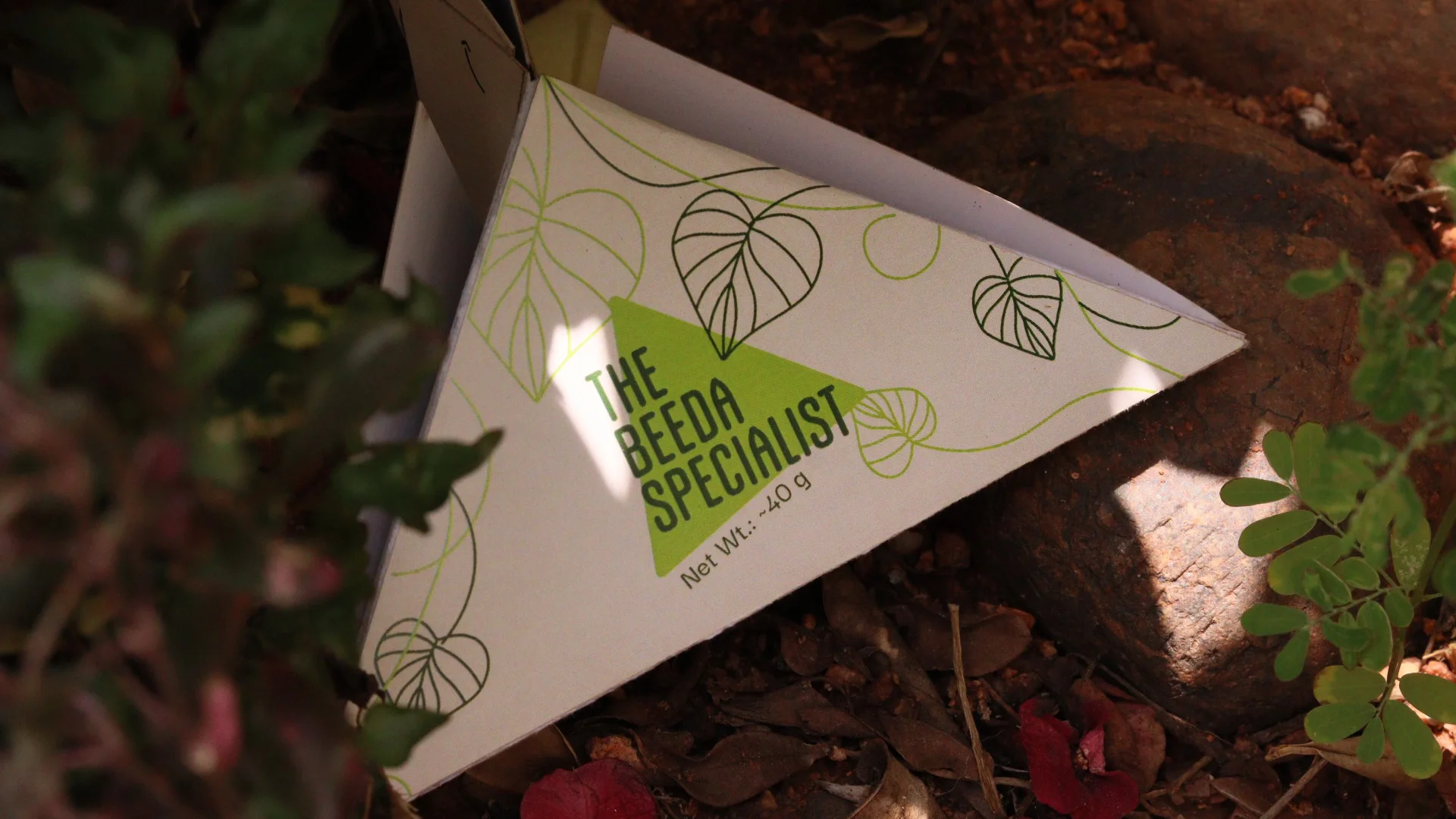
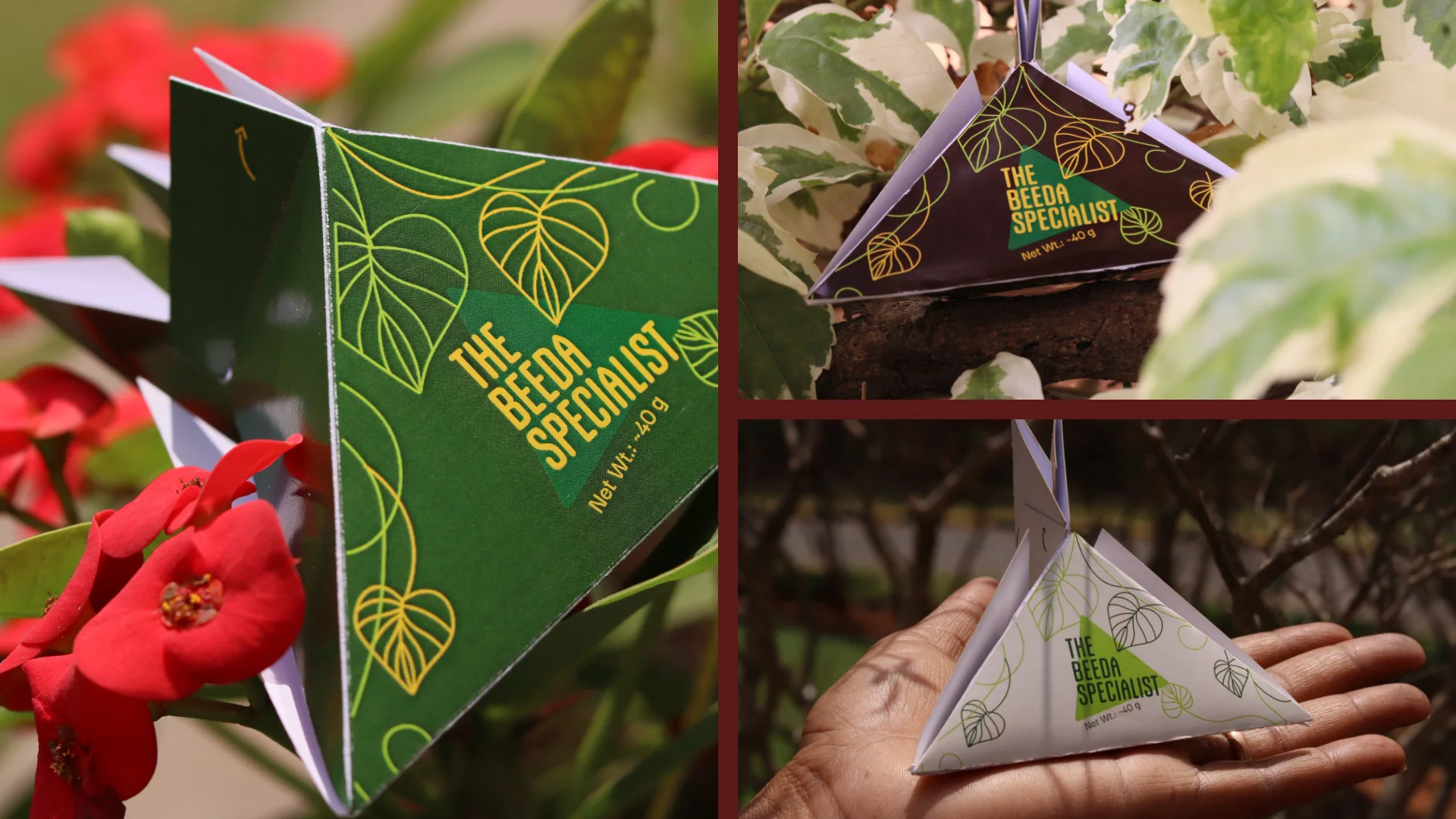
My folded pyramid, carrying my teammates' graphics: Pista in cream, Sweet in green and Chocolate in maroon, each wrapped in the gold vine.
Every pack lists its ingredients (betel leaf, gulkand, sweet fennel, desiccated coconut, tutti frutti, cardamom and sugar syrup) and carries a sweetness radar: a star rating for how sweet it is.
Drag the rail sideways, or move over a card to see the project.